
Case study · Commerce engineering
One product, two markets, one codebase
NoeraSkin is a direct-to-consumer skincare brand selling from two domains in two languages. I built the WooCommerce platform underneath it — product, cart, checkout, consent and SEO infrastructure, engineered as one system rather than two separate builds.
- Project
- NoeraSkin
- Role
- Sole engineer
- Markets
- English (.com) & Spanish (.es)
- Status
- Live · production
The brief
A single product selling in two markets creates a problem most brochure sites never have to solve: the same catalogue, the same checkout and the same trust signals have to work correctly in two languages, on two domains, without becoming two separate maintenance burdens.
The brief was to build one commerce platform that could operate as two markets — without a multilingual plugin doing the heavy lifting, without an SEO plugin bolted on afterwards, and with consent and analytics designed in from the start rather than retrofitted before a compliance deadline.
Constraints that shaped the build
One catalogue, two markets
The same product had to sell correctly in two languages, on two domains, without maintaining two separate builds — every change had to reach both markets without becoming double the work.
No multilingual plugin
Two real WordPress sites, one per market, joined by ID-matched content clones instead of a translation plugin — more publishing discipline, no plugin tax on every page load.
SEO owned, not installed
Canonical URLs, hreflang, structured data and sitemaps needed to work correctly across both domains from day one — building them into the theme meant a fix was code already owned, not a support ticket.
Consent before tracking
Analytics and marketing tags could not fire before a visitor had actually consented — the consent state had to be the authority the tracking layer deferred to, not the other way round.
How it was approached
Four decisions carry the build. The margin notes are the evidence: what each decision concretely produced.
Multisite with ID-matched content instead of a multilingual pluginn.01
Two real domains — noeraskin.com and noeraskin.es — run as two sites in one WordPress Multisite network, each with its own catalogue and its own SEO, rather than one site serving translated strings. Reciprocal hreflang is emitted automatically, but only once the matching page exists on both sites — a deliberate constraint that keeps the two markets honest with each other.

SEO and sitemap architecture built into the themen.02
Canonical URLs, robots meta, hreflang and a sitemap index are generated by the theme itself rather than a plugin, per site. When a routine audit found the flagship product’s sitemap entry contradicting its own canonical, the fix was code already owned, not a support ticket against someone else’s plugin.
A real commerce flow, not a template checkoutn.03
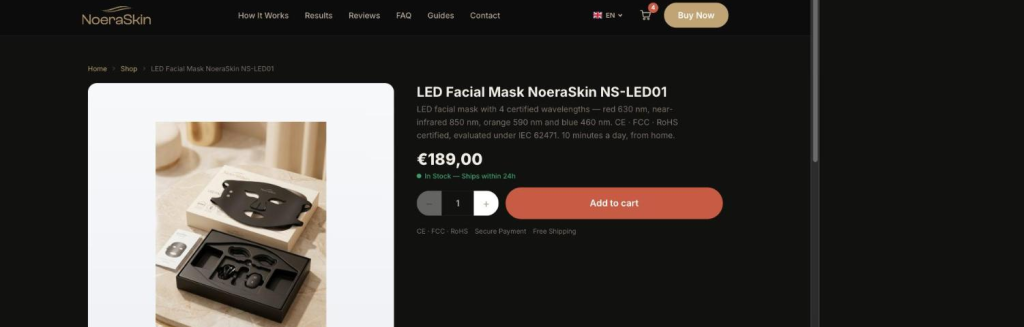
Product, cart and checkout are WooCommerce underneath, but the shipping-method selection is rebuilt on WooCommerce’s own rate API and fragment system rather than hardcoded — so it keeps working as zones, rates and carriers change. Card payments run through the official WooCommerce Stripe gateway, configured for the store rather than custom-built.
Consent as the authority, analytics as a consumer of itn.04
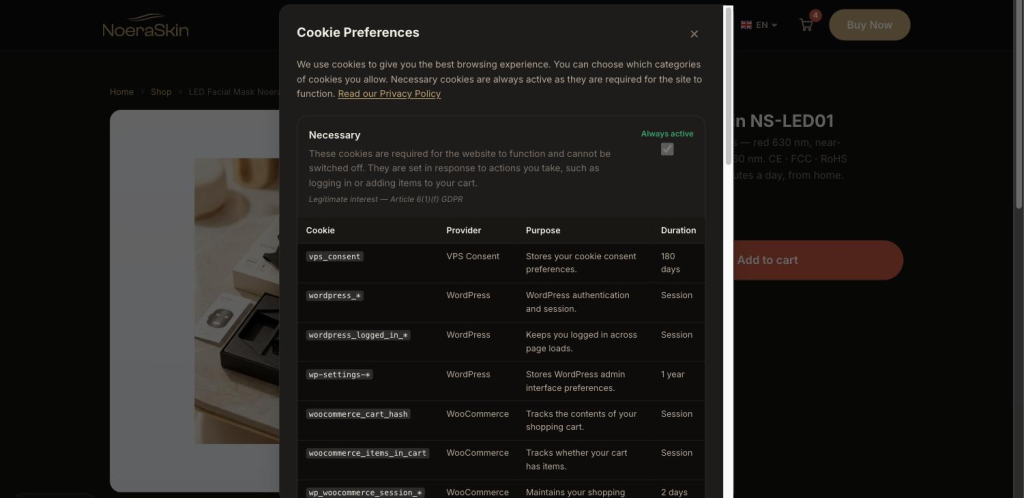
Google Consent Mode v2 denies analytics and marketing signals by default, before the tag manager loads — and the preferences panel lists exactly which cookies exist, who sets them, and for how long. Nothing is tracked before a visitor has actually agreed to it.
Outcome
NoeraSkin sells the same product in two languages from two domains, on a platform where the commerce, the consent and the SEO all belong to the same codebase.
It is a live store, not a demo: it has been launched, monitored and iterated on since — including a sitemap/canonical contradiction found and fixed in production, not left for someone else to notice.n.05
- WordPress Multisite
- Custom theme
- WooCommerce
- Stripe (configured)
- Consent Mode v2
- Custom SEO & sitemaps